Most SEO advice online is written for US or UK businesses. If you apply it blindly to a Malaysian website, you’ll get mixed results at best.
Malaysia has its own search behavior, its own language dynamics, and its own local search patterns. What converts in California doesn’t always convert in Kuala Lumpur.
This article is a practical breakdown of SEO for Malaysia, based on what actually moves the needle for Malaysian businesses.
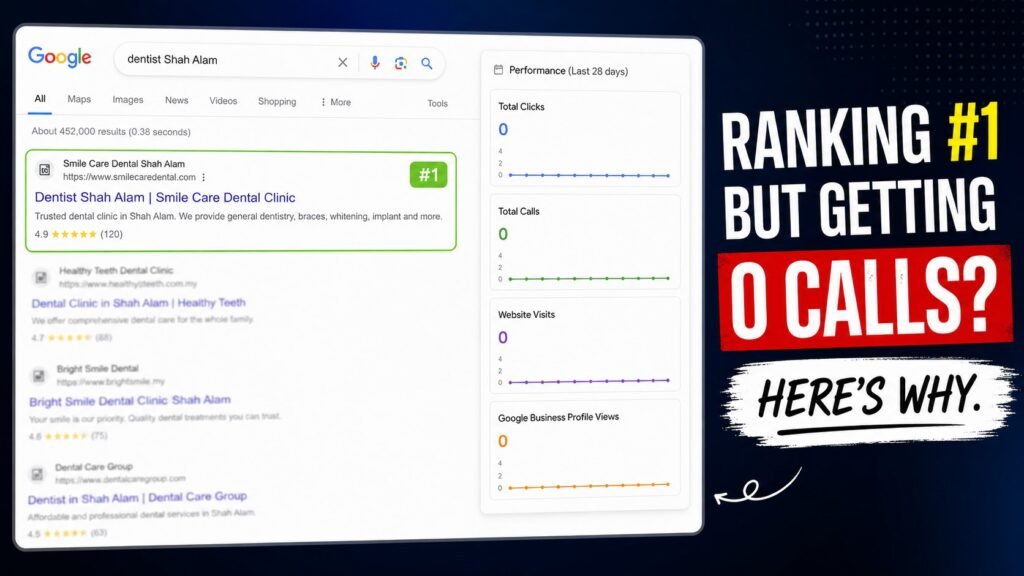
Why SEO in Malaysia Is Different
Malaysia is a multilingual market. Your customers are searching in English, Bahasa Malaysia, and Mandarin, sometimes all three depending on the product and the person.
A restaurant in Chow Kit might get customers searching “best nasi lemak KL,” “restoran nasi lemak Kuala Lumpur,” and “KL好吃的椰浆饭” all at the same time. If your SEO only covers English, you’re missing a significant portion of that audience.
Most SEO tools are also built around English-language keyword data. Monthly search volume figures for Bahasa Malaysia keywords are often undercounted or reported inconsistently. This means keyword research for Malaysian businesses requires more manual checking than you’d expect.
Local SEO Is the Highest Priority for Most Malaysian SMEs
If you run a service business, a clinic, a restaurant, a law firm, or a property agency in Malaysia, local SEO is where you should focus first.
Local SEO means showing up in Google Maps and the local pack when someone nearby searches for what you offer. For most Malaysian SMEs, this drives more calls and walk-ins than organic blog traffic does.
The foundation of local SEO is your Google Business Profile. If it’s incomplete, outdated, or unclaimed, you’re giving business to competitors who bothered to fill theirs in.
What your Google Business Profile should have:
- Your correct business name, address, and phone number
- Your primary and secondary business categories set correctly
- A real description that includes your services and location
- Photos of your premises, team, and work
- Regular Google posts to show the profile is active
- Consistent responses to reviews
The second layer is local citations. Your business details should appear consistently across directories like Foursquare, Yelp Malaysia, local business directories, and any industry-specific platforms.
If your NAP (Name, Address, Phone) is inconsistent across these sources, it creates trust issues for Google.
Keyword Research for the Malaysian Market
Keyword research for Malaysian businesses needs to account for three things most agencies miss.
First, location modifiers matter more than you think. “Dentist” is too broad. “Dentist Petaling Jaya” or “klinik gigi Petaling Jaya” is where buying intent lives.
Second, Bahasa Malaysia keywords are underutilized. Many Malaysian business websites are English-only. If your competitors are also English-only, Bahasa Malaysia content is a genuine gap you can exploit.
Third, question-based keywords are growing. Searches like “berapa kos pasang aircond” or “how much does it cost to register a company in Malaysia” drive qualified traffic from people actively researching a purchase.
Tools worth using for Malaysian keyword research:
- Google Search Console (to see what you already rank for)
- Google Keyword Planner (with Malaysia as the target country)
- Ahrefs or Semrush (set to Malaysia)
- Google’s “People Also Ask” and autocomplete (for actual search phrasing)
Technical SEO Basics Malaysian Businesses Consistently Get Wrong
You don’t need to be technical to understand this. But these issues will hold your rankings back no matter how much content you publish.
Page speed on mobile. Most Malaysians access the internet on mobile. If your website loads slowly on a phone, Google notices, and so do users. Check your Core Web Vitals in Google Search Console.
Missing or weak title tags and meta descriptions. These are the words people see in search results before they decide to click. If they’re auto-generated or left blank, you’re losing clicks even when you rank.
Duplicate content. This often happens with eCommerce sites using WooCommerce or Shopify, where product filters create multiple URLs with near-identical content. It confuses Google about which page to rank.
No HTTPS. If your website still runs on HTTP, fix this immediately. It’s a basic trust signal and Google has been flagging non-secure sites for years.
Content Strategy: Don’t Just Blog for the Sake of Blogging
A lot of Malaysian businesses publish blog posts because they were told it helps SEO. Then they wonder why the traffic never comes.
Blogging helps when you write about what your target customers are actually searching for, not what you think is interesting about your industry.
For a property agent in Johor Bahru, a post titled “How to Buy a House in Johor Bahru: Step by Step Guide for First-Time Buyers” will outperform “Welcome to Our New Office” every single time.
Before you write any content, check if people are actually searching for it. If the keyword has zero volume in Malaysia, it won’t bring traffic regardless of how well it’s written.
Backlinks: How Important Are They for Malaysia?
Backlinks still matter. A website with quality backlinks from relevant, trustworthy sources will outrank a site with none, assuming everything else is equal.
But in Malaysia’s local search landscape, especially for SMEs, the gap in backlinks between businesses is often smaller than people think. You don’t need 500 backlinks to rank for “accounting firm Subang Jaya.”
What matters more at the local level is:
- A complete and active Google Business Profile
- Consistent citations across directories
- Relevant on-page content with proper keywords
- A technically healthy website
Backlinks become more important as you go after more competitive national keywords.
AI Search and What It Means for Malaysian Businesses
Google AI Overviews are appearing more frequently in Malaysian search results. ChatGPT, Gemini, and Perplexity are also being used by Malaysians to research products and services.
This is relevant to your SEO because AI systems pull answers from content they trust. If your website isn’t structured to answer questions clearly, you’re less likely to be cited.
What helps here:
- Answer questions directly and early in your content
- Use clear headings that reflect actual search questions
- Write in a way that’s easy to extract and quote
- Cover your topic thoroughly so the AI sees your page as a reliable source
Where to Start If You’re New to SEO in Malaysia
Don’t try to do everything at once. Start here:
- Claim and complete your Google Business Profile
- Fix any technical issues on your website (speed, HTTPS, title tags)
- Do keyword research focused on your city and service
- Create or update your core service pages with the right keywords and clear calls to action
- Build local citations consistently
- Publish content that answers questions your customers are actually asking
SEO takes time. In Malaysia, most competitive local markets take three to six months of consistent work before you see meaningful movement. Anyone promising page 1 in two weeks is not someone worth trusting.
If you want help auditing your Malaysian website and putting together a plan that makes sense for your business, Khalid SEO specializes in SEO for Malaysian businesses across KL, Selangor, Penang, Johor, and beyond.